For years, the conversation around last-mile delivery came down to two questions: who delivers faster? and who does it cheaper? That framing shaped strategies, investments, and consumer expectations.
Today, that paradigm no longer holds. Speed stopped being an advantage and became a baseline expectation, while costs are hitting a ceiling that's hard to break through in congested cities, facing tighter environmental restrictions, with residents who no longer accept that logistics should chip away at their quality of life.
So I want to share something I consider key: the future of last-mile delivery won't simply be faster or cheaper — it will be hybrid. A model that combines speed with sustainability, proximity with convenience, and that manages to integrate into the city without breaking its social or architectural fabric.
First pillar: speed as the baseline
A decade ago, waiting 72 hours for an order was normal. Today, same-day delivery feels like the bare minimum. Speed is no longer an added value — it's the starting point.
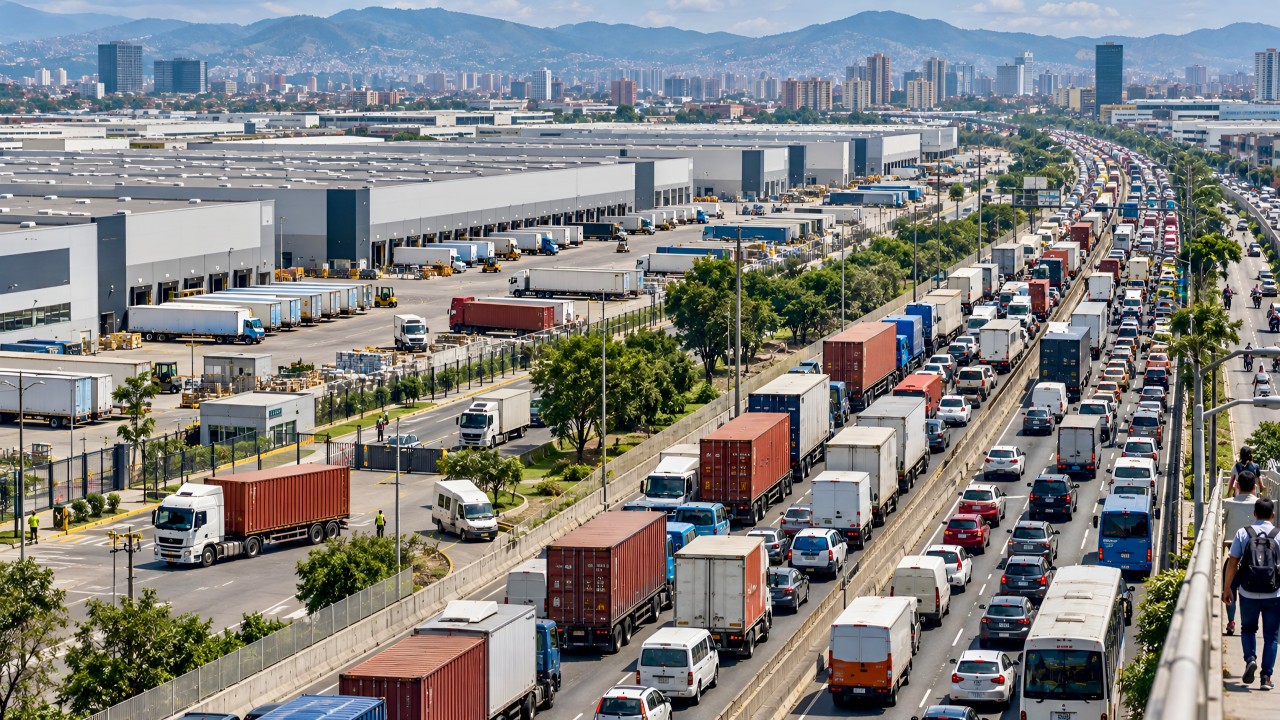
But that expectation comes with a hidden cost: more scattered warehouses, more vehicles on the road, more pressure on cities. Delivering fast is no longer the real challenge; the challenge is how to do it without choking urban space or eroding residents' quality of life.
And that very pressure leads us to the second pillar.
Second pillar: consumers want options
Once speed stops being a differentiator, what moves to the front is consumer expectations. Today, promising speed alone isn't enough: customers want to be able to choose.
Some prioritize immediacy. Others are fine waiting longer if the delivery is sustainable. Many prefer picking up their order at a locker or a neighborhood store, and more and more people value being able to choose a delivery window or reschedule in real time.
Last-mile delivery then becomes a hybrid portfolio of solutions. And within that portfolio, sustainability starts to set the pace.
Third pillar: sustainability as the filter
Flexibility is of little use if it isn't aligned with the defining filter of our time: environmental impact. Cities no longer see logistics as a neutral actor, but as one of the main sources of traffic and pollution.
This is where electric vehicles, cargo bikes, on-foot deliveries, and urban microhubs come into play. But rolling them out isn't enough. The key is making sure these solutions integrate harmoniously into neighborhoods, without becoming a new source of social friction or altering the architectural identity of our cities.
And that integration brings us to the next pillar: urban infrastructure.
Fourth pillar: urban infrastructure as the central piece
Sustainability doesn't hold up on its own — it needs room in the city to be viable. Without the right infrastructure, the hybrid model stays theoretical.
I'm talking about microhubs that bring inventory closer, neighborhood stores converted into logistics nodes, adapted strip centers, and mixed-use projects where housing, retail, and logistics coexist.
The big question is: how do we enable these spaces without overwhelming the community or breaking with the surrounding architecture?
And this is where technology and collaboration play a decisive role.
Fifth pillar: technology and collaboration as enablers
We can have speed, flexibility, sustainability, and infrastructure, but none of it will work without efficient management.
Artificial intelligence optimizes routes in real time, big data anticipates demand, and traceability builds consumer trust. But even with the best technology, the transformation won't be viable without collaboration.
I've seen how, in several cities, companies that were competitors yesterday now share infrastructure and work alongside authorities to cut costs and emissions. Last-mile delivery isn't solved alone: it's built as a network.
Conclusion: from the package to the city
Last-mile delivery is no longer measured only in kilometers or minutes. Today it's measured by its impact on the city, the economy, and people's lives.
The future won't simply be faster or cheaper. It will be more hybrid, more flexible, more urban, and more collaborative.
And I want to leave you with two questions to open the conversation:
Do you think Latin America is ready to make the leap to the hybrid delivery model?
How can we do it without disrupting the lives of residents and the architectural character of our cities?