Every time I read about new logistics parks being built, large floor areas coming onto the market, or distribution centers with occupancy levels close to 100%, I find reasons to celebrate.
These are significant investments. They create jobs, energize the real estate sector and allow many companies to improve their operations.
For years I have been involved in urban logistics, and I know both the advantages and the drawbacks of concentrating inventory and operations in large distribution centers.
I know what we can gain in efficiency, control and cost reduction, but also what can happen when that concentration lengthens delivery distances or ends up overloading certain road corridors.
And there is something that worries me more and more.
Are we making logistics more efficient inside distribution centers while making mobility outside them harder and harder?
Because it is one thing for a company to operate efficiently from a large facility, and quite another for many companies to end up concentrating their operations in the same area, using the same avenues and highways.
What works very well for each of them does not necessarily work equally well for the city that receives them.
A good real estate deal is not always a good urban decision
Let's imagine an area with large stretches of available land and good access to a highway.
First a distribution center is built. Then another arrives. Over time, new logistics parks appear, drawn by the same location, connectivity and availability of land.
Each project may have excellent occupancy, efficient operations and attractive financial results.
But while we celebrate those indicators, something else is happening.
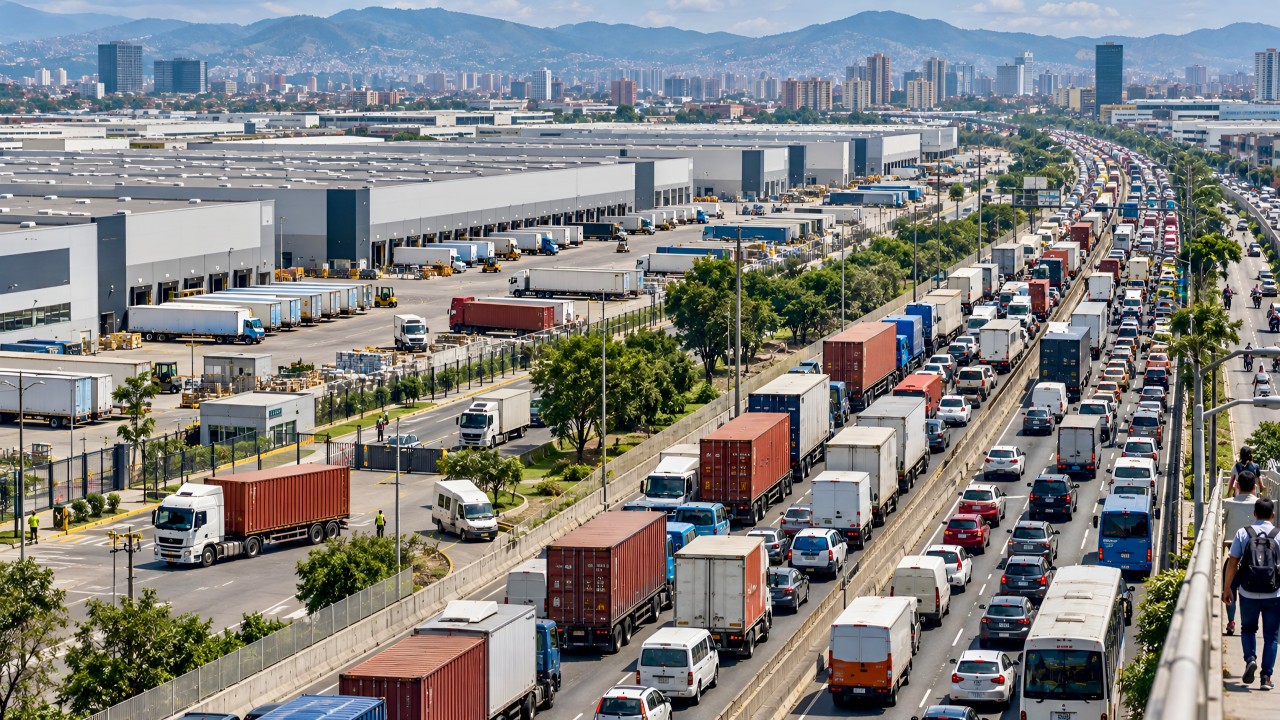
The movements of trucks, delivery vehicles, workers and suppliers begin to concentrate on the same access roads and road corridors.
And those roads are also used by the people who live, work, study or carry out other activities in the area.
Then a question appears that I consider fundamental:
Who is evaluating what happens when we add up the movements of all those projects?
Because each development may have made a reasonable decision from the standpoint of its own operation, but that does not guarantee the result is equally favorable for the entire city.
We may be optimizing each distribution center individually while, at the same time, badly organizing our entire metropolitan logistics network.
I am not saying that large distribution centers are responsible for all the congestion. That would ignore much broader problems of urban planning, public transport and road infrastructure.
In fact, a well-located center can reduce trips, consolidate goods and avoid unnecessary journeys.
What I question is that we keep evaluating these investments mainly from the individual needs of each operation, without paying enough attention to what happens when many similar decisions end up concentrated in the same territory.
Are we building warehouses or planning logistics networks?
I believe we should start looking at logistics beyond the boundaries of each property.
For years we have sought large facilities capable of concentrating inventory, automating processes and supplying ever wider markets.
And that model will remain necessary.
But our cities do not work like big warehouses. They are home to housing, shops, schools, hospitals, offices and millions of people who need to get around every day.
That is why, rather than debating whether we should build large or small distribution centers, I think we should ask ourselves how to better organize the whole network.
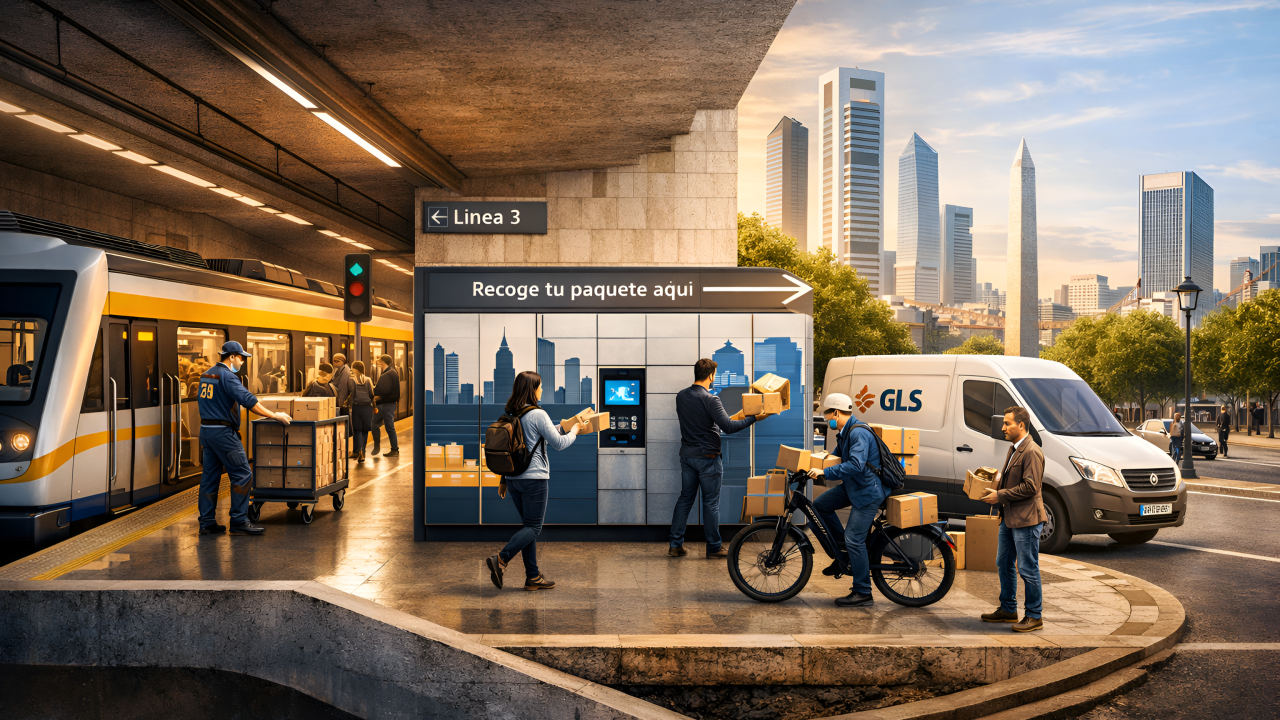
In some areas, a large regional center may be the best alternative. In others, it may be better to complement it with smaller-scale urban facilities, microhubs or last-mile operations closer to consumers.
The goal is not to multiply warehouses all over the city. That could also create new problems if it is not planned properly.
The goal is to understand where each facility should be located, what role it should play and how it will connect with the others.
And to make those decisions, I believe we should start evaluating four aspects:
- The concentration of trips. Not only how many trucks will enter a new project, but how many cargo vehicles, delivery vehicles and workers will use the same roads, especially at peak hours.
- The capacity of road corridors. It is not enough to verify that a site has access to a highway. We need to know how it performs today and what will happen when the other developments in the area come into operation.
- Real distribution distances. Cheaper land may mean real estate savings, but not necessarily lower transport costs if goods must travel longer distances to reach their destinations.
- How the whole network works. Before continuing to concentrate facilities, we should assess whether a combination of large centers and closer distribution points could improve supply and reduce unnecessary trips.
These are questions we should ask before investing and developing, not when the avenues and highways are already starting to collapse.
The cost that does not always show up in our indicators
For years we have learned to measure how much it costs to store, pick orders, transport and deliver goods.
And that is good. Without that information it would be very hard to run competitive operations.
But there is a cost that rarely appears when we evaluate where to develop our logistics infrastructure.
The time people lose getting around.
Because when an avenue collapses, it is not only a delivery that is delayed.
So is the worker heading home, the father who wants to arrive in time to see his children, the small shopkeeper who needs to stock his business, and thousands of people who end up spending a good part of their lives commuting.
Of course, we cannot attribute all that lost time to logistics. But neither should we ignore the effects that concentrating operations can have on a road infrastructure that is often already working at its limit.
And here I believe the responsibility must be shared.
Those of us who invest in and develop logistics infrastructure need to look beyond the profitability of each project. Operators must better evaluate their distribution networks. And authorities have the responsibility to plan the territory considering the combined growth of all these activities.
Because approving projects one by one does not necessarily mean we are planning the development of an entire area correctly.
Logistics needs to keep growing. Our cities need supply, investment, jobs and competitive companies.
But that growth should not be measured only by the square meters built, occupancy levels or the volume of goods we move.
We should also ask what is happening to the city that receives all that activity.
Over the years I have learned to look more and more at what happens outside the land and facilities we develop. Because a good location should not be judged only by what it allows us to do inside a property, but also by how it integrates and connects with everything around it.
And there is something I would not want us to lose sight of.
We can recover money, improve operations and build new infrastructure. But the hours a person loses in traffic every day cannot be recovered.
That is why I would like to end with a question that I believe we should ask ourselves before developing our next logistics project:
Are we building the large distribution centers that companies need, or are we designing the logistics network that our cities truly need?