For years we've learned to evaluate the quality of a logistics asset by looking inward.
Clear height.
Floors.
Racking.
Loading docks.
Maneuvering yards.
Fire-suppression systems.
Security.
Technology.
And that makes sense.
But the more I watch how cities, climate, and supply chains are changing, the more an uncomfortable question comes to mind:
Are we evaluating what happens outside the warehouse with the same rigor?
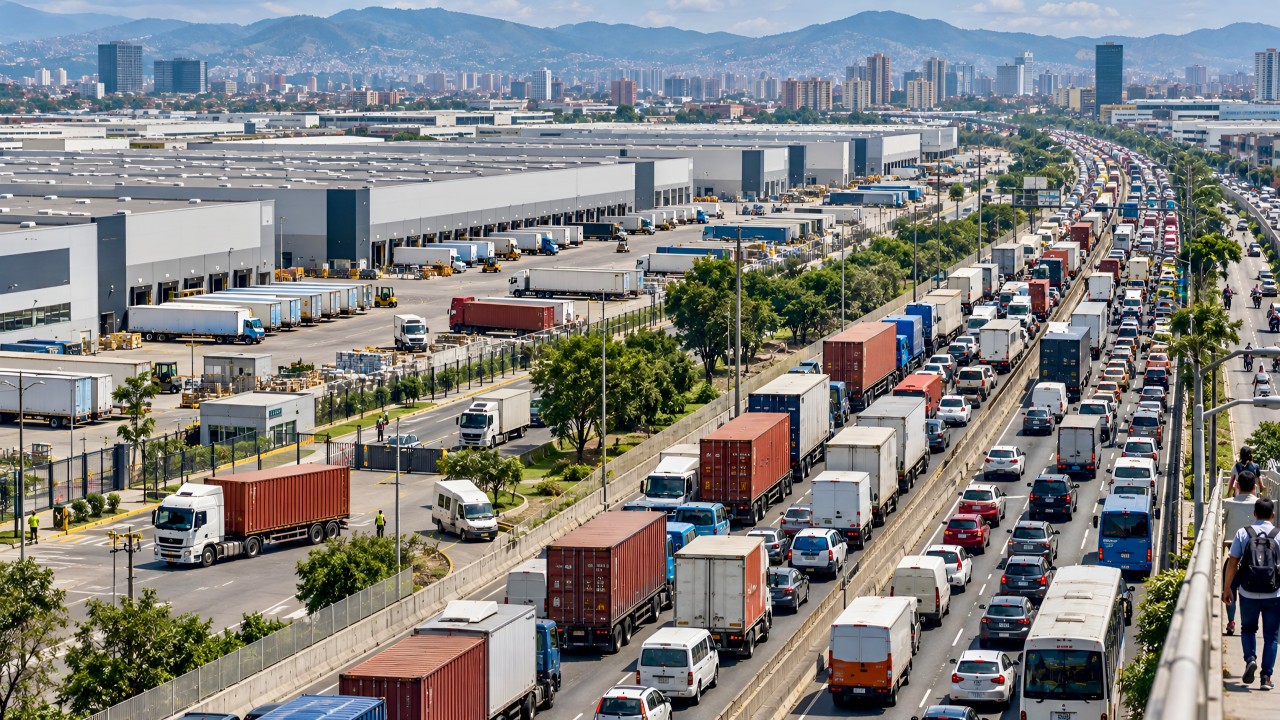
Because a logistics facility can have excellent technical specifications and still depend on far more vulnerable regional infrastructure.
Let's think for a moment about something that normally doesn't show up in the property's marketing brochure:
How many truly independent routes connect the warehouse to the city?
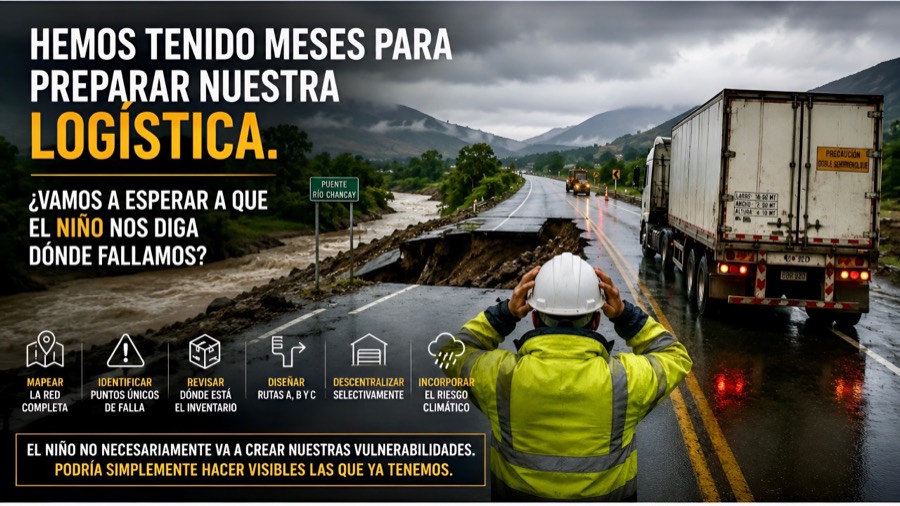
What happens if one of those roads is cut off for 24, 48, or 72 hours?
Is there an alternative route capable of absorbing that traffic?
Could workers still get there?
Could suppliers still deliver?
Could customers still receive their goods?
How much inventory are we concentrating in a single node?
Is there another point in the network from which we could keep operating?
Here's something I think is fundamental.
The resilience of a logistics asset doesn't end at the property line.
The World Bank has in fact argued that the resilience of industrial parks must also account for the road networks that connect them and the criticality of the infrastructure needed to keep supply chains running.
The OECD, for its part, warns that resilience depends on the interdependencies between facilities, transport, infrastructure, and the different components of a network.
And the IDB introduces a word that I think should start carrying much more weight in our real estate decisions:
Continuity.
Not just how much a piece of infrastructure can withstand.
But: how capable is it of continuing to deliver its service after absorbing a shock?
That changes the conversation quite a bit.
Because we could be building ever-better warehouses inside networks that haven't necessarily evolved at the same pace.
And in Peru we have more than enough precedent to pay attention.
The 2017 coastal El Niño damaged thousands of kilometers of highways, roads, and bridges. The impact didn't stop where the water reached.
It also reached the places products stopped reaching.
Where transport was cut off.
Where suppliers and workers struggled to get around.
And where a facility that was physically operational could still end up partly disconnected from the network it needed to function.
That's why I think we should start adding another layer when we evaluate a logistics investment.
Beyond asking:
How good is the warehouse?
We should ask:
How resilient is the system that allows that warehouse to function?
Maybe we should start measuring:
Redundancy of access routes;
Exposure of critical routes;
Dependence on a single corridor;
Continuity of power, water, and telecommunications;
Worker accessibility;
Inventory concentration;
Alternative operating capacity;
Estimated recovery time after a disruption.
Because all of these factors ultimately touch something every owner, operator, or investor understands perfectly well:
business continuity, and ultimately, the value of the asset.
Maybe the next leap for logistics real estate in Peru isn't just building better warehouses.
Maybe it's starting to build more resilient logistics networks.
Because, after all, a warehouse doesn't generate value simply by being well built.
It generates value because it's connected to a network that can keep functioning.
If you're assessing the resilience of your logistics operation, this is exactly what I work on in strategic consulting.
And with an increasingly uncertain climate ahead, I believe there's a question developers, operators, companies, and investors should start asking before evaluating our next asset:
Are we investing in a Class A warehouse… or in a truly Class A operation?