For years we've spent a great deal of time thinking about what happens inside a store.
The format.
The assortment.
The experience.
The technology.
The price.
The square footage.
All of that still matters.
But I'm increasingly convinced that a significant part of retail's future is being decided long before a person ever walks through the door.
It's decided when someone can get there on foot.
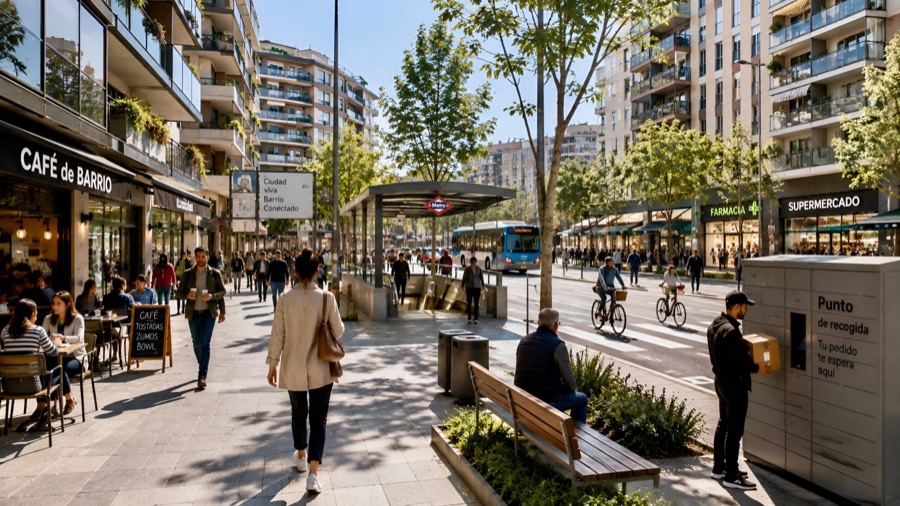
When a metro station connects new flows of people.
When housing, offices, education, health, and entertainment start to mix.
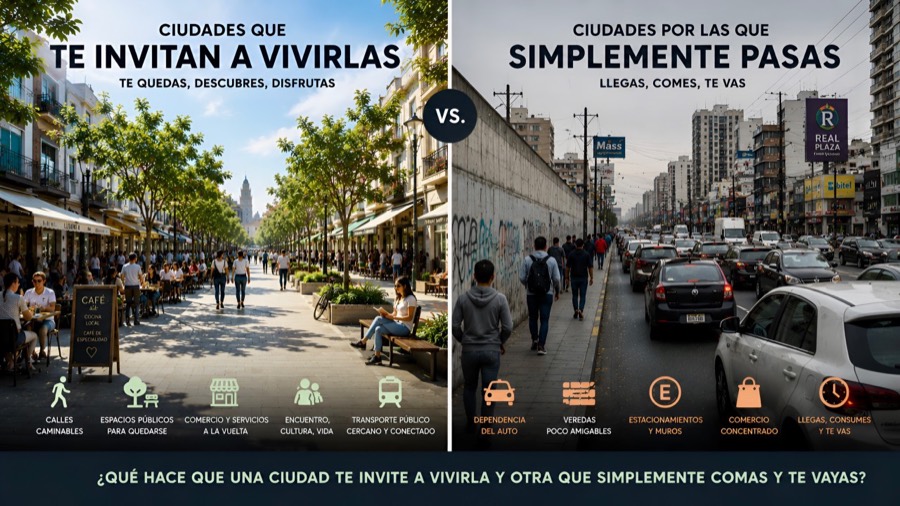
When a street stops being merely a place to pass through and also becomes a place to stay.
And when logistics manages to supply that new urban dynamic without taking it over or degrading it.
That's why I believe we need to start looking at different indicators.
1. Density.
Not just how many people live nearby, but how many different activities take place there during the day.
2. Accessibility.
Maybe we should stop measuring some catchment areas only in kilometers and start measuring them in minutes too.
How many people can get there on foot, by bike, or by public transit in 5, 10, or 15 minutes?
3. Mix of uses.
Housing + work + education + health + entertainment don't just build a city.
They build recurrence.
And recurrence can end up being far more valuable to certain retail formats than one big occasional visit.
4. Walkability and public space.
The sidewalk.
The crossing.
The shade.
The safety.
The spot where someone decides to stop.
These may look like urban-planning variables.
They're also commercial ones.
5. Urban logistics.
Because the retail of the future will have to solve two flows at once:
How people get there.
How products get there.
Here's something I find especially interesting.
A station can generate thousands of trips.
A building can generate hundreds of new residents.
A university can generate students.
An office can generate workers.
But none of them alone guarantees commercial activity.
The real value appears when the city manages to turn those flows into encounters, dwell time, needs, and recurrence.
And that may be where one of our biggest opportunities lies.
This isn't about assuming shopping malls, big-box stores, or traditional formats will disappear.
It's about understanding that new commercial geographies are emerging around:
Urban centralities.
Mass-transit stations.
Mixed-use developments.
Dense, walkable neighborhoods.
Neighborhood retail.
New hubs of everyday activity.
So before we ask:
What store should we put here?
Maybe we should ask a different question:
What is happening — and what will happen — in the city around this location?
Because a retailer can design an extraordinary experience within four walls.
But on its own, it can't control:
Density.
Connectivity.
Public transit.
Walkability.
The mix of uses.
The urban flows that exist outside its walls.
Which brings me to a reflection I think retailers, developers, investors, architects, urban planners, and logistics operators should be discussing a lot more:
Maybe a store's most important asset isn't inside the store.
Maybe it's the city we're building around it.
Are we evaluating our next retail locations with the indicators of the future, or are we still mainly relying on the ones that worked for us in the past?