A city isn't valued only for how many buildings it builds.
It's valued for how easily it lets people live, walk, find their way, meet each other, and belong.
For years, many cities grew as if it were enough to raise more projects, open more roads, release more land, and add density to claim they were moving forward.
But a city isn't understood only from a site plan, a buildable-area study, or a spreadsheet.
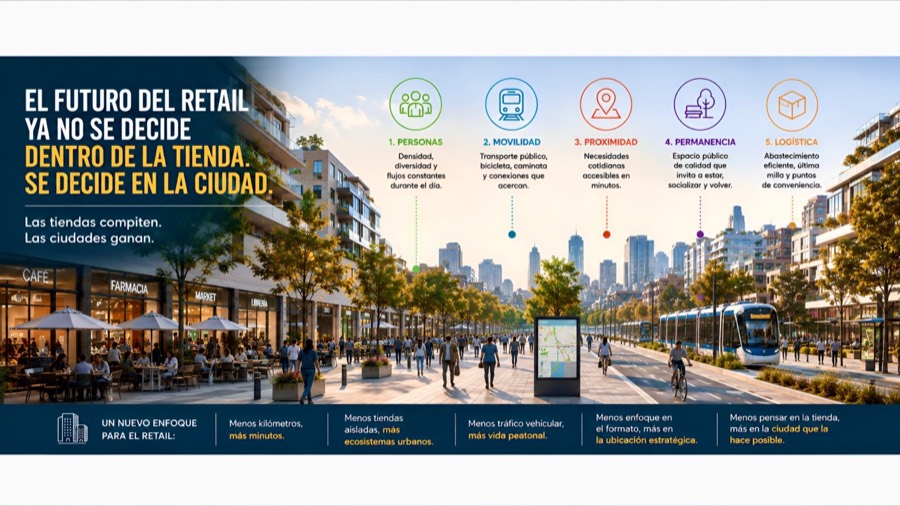
A city is understood through the everyday experience of the people who live in it.
And that experience begins with something deeply urban: being able to read the city, find your way around it, and feel that you can make its spaces your own.
When someone walks through a city and understands where they are, where they can go, what activities happen around them, which streets connect, which places invite them to stay, and which spaces build trust, that city starts creating real value.
Not just real estate value.
Also human, social, economic, and urban value.
Because a legible city reduces anxiety, improves mobility, strengthens perceived safety, activates retail, supports neighborhood life, and lets people build an emotional relationship with the place where they live, work, or pass through.
That's a point the real estate market still often underestimates.
A project can have good architecture, appealing finishes, well-designed common areas, and an efficient floor plan.
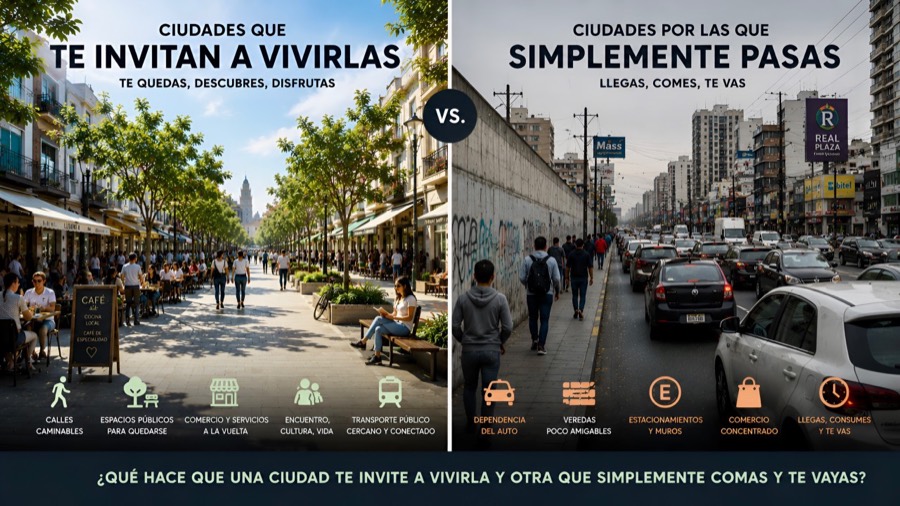
But if, stepping outside the building, a person runs into confusing streets, weak sidewalks, closed-off walls, no retail, unsafe crossings, and spaces without identity, the urban experience breaks down.
And when the urban experience breaks down, the asset's future value weakens too.
1. The city must be legible
A legible city lets people understand its structure without effort.
It's not just about signage.
It's about urban clarity.
Streets that connect logically.
Corners that help people orient themselves.
Buildings that engage with their surroundings.
Ground floors that show activity.
Recognizable public spaces.
Urban landmarks that help people find their bearings.
Continuous pedestrian routes.
When a city can't be read, people feel like outsiders in it.
They walk less.
They linger less.
They spend less.
They trust less.
And that doesn't only affect the pedestrian. It also affects retail, tourism, investment, mobility, and the perception of safety.
2. Finding your way is also well-being
Being able to orient yourself isn't a minor detail.
It's a form of urban well-being.
A city that helps people find their way reduces friction, gives back time, and lightens the mental load of daily life.
Knowing which way to walk.
Understanding where to cross.
Spotting a transit station.
Recognizing a safe route.
Finding nearby services.
Locating everyday retail.
Feeling that the environment makes sense.
We often talk about well-being inside the home, but we forget that much of it begins the moment a person steps out the building's door.
The city can also nurture or wear people down.
It can make daily life easier or heavier.
It can invite people to walk or push them into the car.
It can build trust or produce rejection.
3. Making it your own isn't owning it: it's feeling part of it
Making the city your own doesn't mean owning it.
It means being able to use it, walk it, recognize it, and feel it's close to you.
Urban appropriation happens in everyday gestures:
The older adult who walks confidently to a nearby store.
The child who knows their route to school.
The neighbor who greets the shopkeeper on the corner.
The worker who can have lunch near their office.
The family that uses a plaza without feeling they're intruding on someone else's space.
The resident who doesn't need a car to meet every basic need.
That sense of ownership doesn't appear by chance.
It's designed.
It's planned.
It's allowed to happen.
And it can also be destroyed when projects turn inward, when ground floors add no life, when the street becomes an afterthought, or when public space is treated as leftover land.
4. The isolated building is starting to lose its power
For a long time, real estate success was measured from the front door inward.
Square meters.
Layout.
Finishes.
Amenities.
Parking.
Views.
But the next stage of urban value will require looking from the door outward, too.
What happens on the sidewalk?
How walkable is the surrounding area?
What services exist nearby?
How clear is the connection to transit?
How much activity does the ground floor have?
How safe does the street feel?
What relationship does the project build with the neighborhood?
What everyday experience does it create for whoever lives, shops, works, or passes through there?
The building will still matter.
But its value will increasingly depend on the quality of the urban system it belongs to.
5. The ground floor will be one of the great urban tests
If a city is read by walking through it, then the ground floor is the project's first language.
A closed-off ground floor communicates distance.
A blank facade communicates rejection.
A long wall communicates insecurity.
An isolated entrance communicates disconnection.
An active ground floor, on the other hand, can transform the relationship between building and city.
Everyday retail.
Useful services.
Visual transparency.
Clear entrances.
Wide sidewalks.
Shade.
Lighting.
A reason to stay.
Continuous pedestrian flow.
The ground floor shouldn't be treated as a leftover part of the project.
It should be understood as a strategic piece of urban value.
Because that's where it gets decided whether the building brings life to the city or simply interrupts it.
6. A city that people understand gets used more
When a city is clear, close, and recognizable, people use it with more confidence.
And when they use it more, something fundamental happens: urban life appears.
That urban life activates retail, improves perceived safety, creates encounters, increases foot traffic, strengthens identity, and raises the value of the surrounding area.
That's why urban legibility isn't an aesthetic issue.
It's an economic, social, and urban condition.
A clear street can be worth more than a confusing one.
An active corner can transform an entire area.
A well-connected station can reorganize a neighborhood.
A project well related to its surroundings can generate more value than one that only stands out in renderings.
7. The future belongs to projects that build urban relationships
The city shouldn't force people to decode it every single day.
It should help them live better.
That's why the great challenge for those who develop, design, invest in, or manage city won't be simply building more.
It will be building better relationships between buildings, streets, transit, retail, services, and daily life.
Because people don't value a city only when it's modern.
They value it when they can understand it.
When they can walk it.
When they can trust it.
When they can make its spaces their own.
When they feel the city doesn't demand too much of them just to live in it.
Maybe that's one of the big questions we should start asking ourselves more seriously:
Are we building cities that people can read, navigate, and make their own — or are we still raising projects that only make sense on a site plan, a buildable-area study, and a spreadsheet?